By Fabian Barcelo, Founder & Veterinary ScientistVet-reviewed
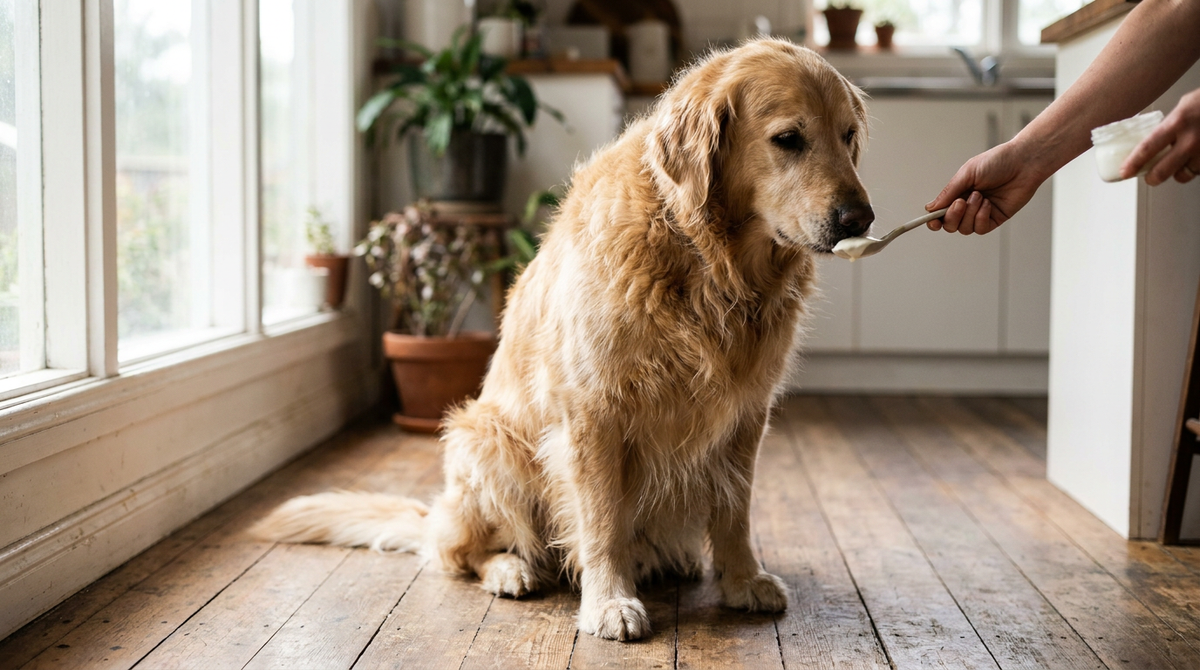
Most owners know the moment. Your dog has been asleep for an hour, you call them, and they get up in stages: front end first, then a long stretch, then a few stiff steps before they loosen up and trot off as if nothing happened. At Innovet, we hear about this often. It is easy to brush off as "just getting older", but stiffness after resting is one of the earliest and most useful signs a dog gives us about their joints.
Key takeaways
- Stiffness that eases after a few minutes of movement is a classic pattern in dogs with sore or ageing joints, and it deserves attention rather than dismissal.
- Stiffness has several possible causes, including joint wear, previous injury, muscle strain and other conditions, so a vet check is the only way to know which.
- Healthy weight, steady low-impact exercise, a warm and supportive bed and non-slip floors do a lot of the heavy lifting at home.
- Daily nutritional joint support, such as glucosamine, chondroitin and green-lipped mussel, is a sensible addition alongside your vet's guidance, not a replacement for it.
01Why dogs stiffen up after rest
A joint is a moving surface lined with cartilage and cushioned by a thin film of synovial fluid. Movement keeps that fluid circulating. After a long rest, joints that are worn or sore can feel tight until activity warms the tissues and gets the fluid moving again. That is why the stiffness often shows up after sleeping, after a car trip or after a long lie-down following exercise, and fades as your dog gets going.
This is a pattern, not a diagnosis. Cartilage wear, an old injury, a strained muscle, a developmental problem and conditions unrelated to the joints can all produce a dog that is slow to rise. Our guide to the early signs your dog needs joint support lists the other things worth noticing alongside stiffness, such as reluctance to jump or shorter walks.
02What to notice, and what to tell your vet
Vets work from detail. Before an appointment, a few days of simple notes make the conversation far more useful than "he seems a bit stiff". Film a short clip of your dog getting up, because dogs often move better in a consult room full of new smells.
When it happens
First thing in the morning, after naps, after walks or after car trips.
How long it lasts
A minute or two, or longer. Does it ease with movement or stay?
Which leg or joint
One side or both, front or back, hips, knees or elbows.
Other changes
Stairs, jumping, play, licking a joint, appetite or a change in mood.
Worth raising at the next check-up
- Mild stiffness that clears within minutes
- Slower on stairs or hesitant to jump into the car
- Stiffer on cold mornings or after bigger days
Book a vet visit soon
- Limping that persists, or a leg held off the ground
- Sudden onset, crying out or a swollen joint
- Stiffness with lethargy, fever, poor appetite or weakness
03What helps at home
The most powerful levers are unglamorous. Weight comes first, because every extra kilo loads the joints on every step, and our guide to weight management for dogs and cats covers a sensible approach. Next is movement: regular, steady, low-impact exercise such as lead walks and gentle swimming keeps muscle around the joints, whereas weekend marathons followed by days on the couch tend to produce the very stiffness you are trying to avoid.
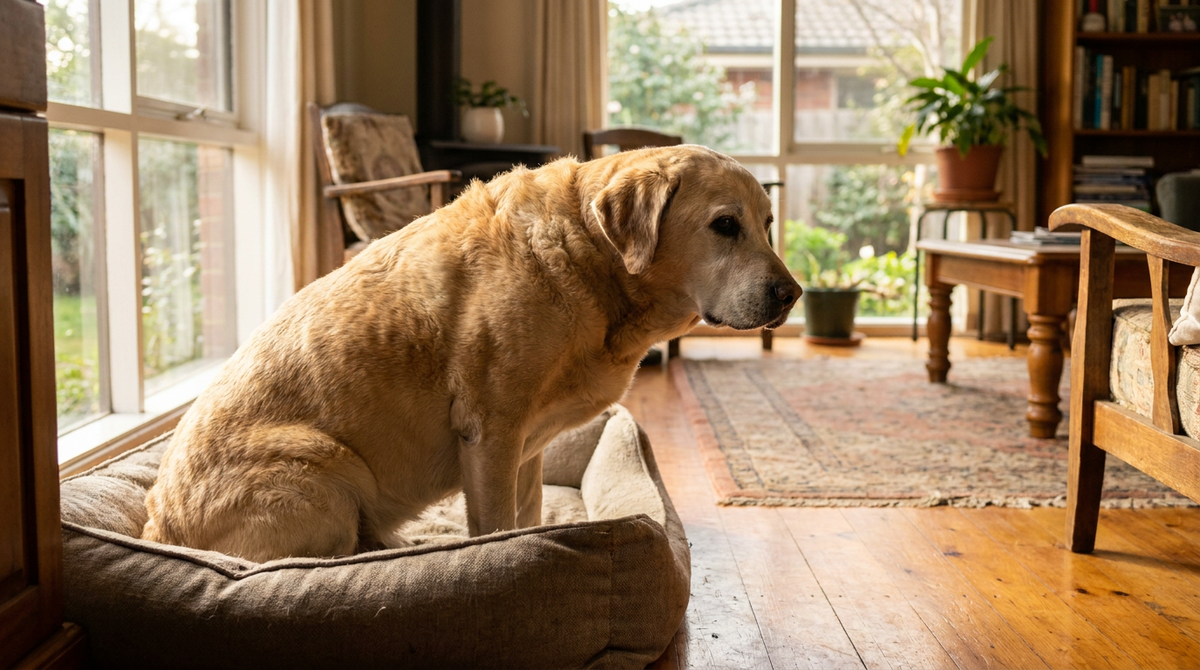
The environment matters too. A supportive, warm bed away from draughts, non-slip rugs on timber or tiles, a ramp for the car and a short, gentle warm-up walk before the main outing all take strain off tired joints. In cooler months the effect is more obvious, and our piece on winter and your dog's joints goes into cold-weather routines.
Stiffness that eases with movement is your dog's way of telling you something. Listen early.Innovet
04Where nutritional joint support fits
Alongside weight, movement and your vet's plan, many owners add pet supplements for joint support to the daily routine. The best-known ingredients are glucosamine and chondroitin, which are building blocks of cartilage, and green-lipped mussel, a source of omega-3 fatty acids (EPA and DHA). Our explainers on glucosamine and chondroitin and green-lipped mussel set out what each does and what the evidence does and does not show.
It helps to be realistic. Supplements are nutritional support, not a cure, and results vary between dogs. Most owners and vets look for change over weeks rather than days, so note how your dog gets up now and compare after consistent daily use. Starting before the problem is advanced is generally easier, which our guide on when to start dog joint support explains.

Our Joint Health+ is a veterinarian-developed meal topper with glucosamine HCl and chondroitin sulphate for cartilage support and joint cushioning, plus green-lipped mussel for omega-3 support. For the full picture of the category, see our joint health guide for dogs and cats and the dog supplements Australia guide. If hip problems run in your breed, hip dysplasia and nutrition is worth reading as well.
None of this replaces a diagnosis. If your dog is stiff after resting, see your vet, then build a plan together that blends weight, movement, environment and nutrition.
Frequently asked questions
Why is my dog stiff after sleeping?
Joints that are worn or sore can feel tight after a long rest, and movement warms the tissues and circulates joint fluid. Stiffness that fades after a few minutes is a common pattern in older dogs, but it can have several causes, so it is worth mentioning to your vet.
Is stiffness after rest a sign of arthritis in dogs?
It can be, because it is one of the commonly reported early signs. It is not a diagnosis by itself. Only a vet can examine your dog and tell you whether joint disease, an old injury or another condition is behind it.
When should I see a vet about a stiff dog?
Book a visit if stiffness is persistent, worsening or paired with limping, a swollen joint, pain, lethargy or poor appetite. Sudden onset or crying out needs prompt attention. For mild morning stiffness, raise it at the next check-up and film it first.
What can I do at home for a stiff dog?
Keep your dog at a healthy weight, offer steady low-impact exercise, add a warm-up walk, provide a supportive bed and non-slip surfaces, and use ramps where jumping is hard. Ask your vet whether daily nutritional joint support suits your dog.
Do joint supplements help dogs with stiffness?
Many owners find daily joint support useful alongside veterinary care. Ingredients such as glucosamine, chondroitin and green-lipped mussel are used as nutritional support for joint comfort. Supplements are not a cure, and results vary between dogs, so consistency and patience matter.
How long do joint supplements take to work?
Most owners look for change over several weeks of consistent daily use rather than days. Note how your dog rises and moves before you start so you can compare, and review progress with your vet.
Should I exercise a stiff dog?
Gentle, regular, low-impact exercise is generally better than rest alone, because movement keeps joints and the muscles around them working. Avoid sudden hard exercise after long rests, and follow your vet's advice if a specific problem has been found.
Daily support for comfortable movement
Glucosamine, chondroitin and green-lipped mussel to support cartilage, joint cushioning and mobility.
Shop Joint Health+ →Human-grade · Australian-made
Explore our range of dog and cat supplements, made in Australia with human-grade ingredients.