By Fabian Barcelo, Founder & Veterinary ScientistVet-reviewed
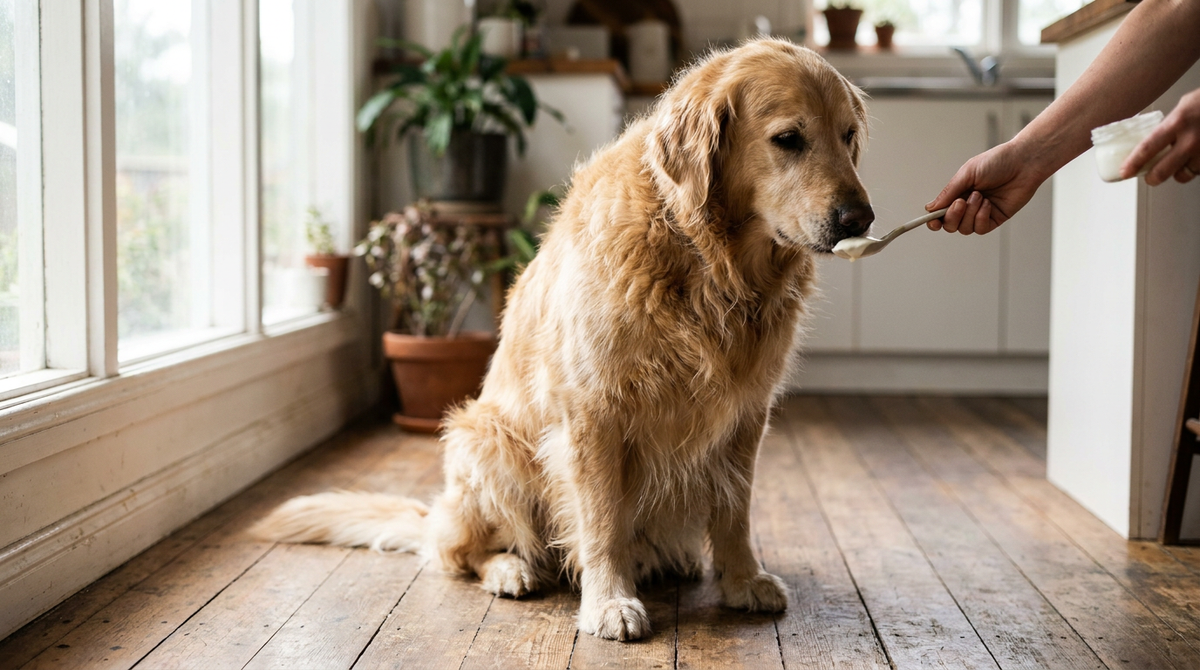
A spoonful of yoghurt is one of the most common things owners share with their dogs, usually because the dog is staring at the tub and the tub is nearly empty. At Innovet, we get asked whether it is safe and whether it does anything for digestion. The honest answer is that plain yoghurt suits many dogs in small amounts, but it is a food, not a gut treatment, and the wrong tub can be dangerous.
Key takeaways
- Plain, unsweetened yoghurt is safe for many dogs in small amounts, but dogs do not need it and some cannot tolerate dairy.
- Always check the label. Xylitol is highly toxic to dogs, and sweetened, flavoured and low-fat yoghurts are the usual places it hides.
- Live cultures in yoghurt vary widely, and there is little evidence that a spoonful improves a dog's gut health.
- Treat it as a treat: keep it within the 10 per cent rule, and see your vet for ongoing loose stools rather than relying on yoghurt.
01Can dogs eat yoghurt?
Yes, many can. Plain yoghurt is not toxic to dogs, and a small spoonful is unlikely to cause problems in a healthy adult dog. That said, "safe for many" is not the same as "good for all", and it is not a food dogs need. A complete and balanced diet already covers their nutritional requirements.
Two things decide whether yoghurt is a fair treat for your dog: what is in the tub, and how your dog's digestion copes with dairy. Both are worth a moment's thought before the spoon goes down.
02The label check that matters most: xylitol
Xylitol is a sugar substitute that is highly toxic to dogs, and even small amounts can cause a dangerous drop in blood sugar and liver damage. It turns up in some sweetened, flavoured, "light" and low-sugar products, and yoghurt is on that list. If your dog eats anything containing xylitol, contact a vet or an emergency clinic immediately.
The simple rule is to choose plain yoghurt with a short ingredient list and read the label every time, because formulations change. Flavoured yoghurts also tend to carry added sugar, fruit pieces and sometimes chocolate or nuts, none of which belong in a dog's bowl.
A sensible choice
- Plain and unsweetened, with a short ingredient list
- Label read and xylitol-free, every single time
- A small spoonful for a first trial
- Given as an occasional treat, within the daily treat allowance
Leave it on the shelf
- Anything containing xylitol or other sweeteners
- Flavoured, fruity or dessert-style yoghurts with added sugar
- Yoghurt with chocolate, nuts, raisins or granola
- Any dairy if your dog gets loose stools or gas from it
03Lactose, dairy and sensitive stomachs
Dogs generally produce less lactase, the enzyme that digests milk sugar, as they mature. Yoghurt contains less lactose than milk because fermentation breaks some of it down, which is why many dogs manage a little. Others do not, and the signs are easy to spot: gas, a rumbling tummy, soft stools or diarrhoea within hours of eating dairy.
Dairy is also rich and fatty. For dogs prone to pancreatitis, or those on a vet-prescribed diet, even a small amount can be a poor idea, so check with your vet first. If your dog already has a touchy gut, our guide to a sensitive stomach in dogs and cats explains what is worth noticing before you add anything new.
04Does yoghurt really help a dog's gut?
This is where the claims outrun the evidence. Yoghurt is made with live cultures, which is why it is often described as "probiotic". But the type and number of cultures vary between products, many are reduced during storage, and bacteria that suit human digestion are not necessarily the strains studied in dogs. We are not aware of solid trials showing that feeding dogs yoghurt improves their gut health.
That does not make yoghurt harmful, it just means a spoonful should not be expected to do the work of a targeted approach. Our explainer on probiotics and prebiotics for dogs and cats sets out what the terms mean, and our guide to digestive and gut health covers the foundations: a consistent diet, gradual changes, fibre and hydration.
Yoghurt can be a pleasant treat. It is not a probiotic plan.Innovet
05How to offer yoghurt sensibly
If your vet is comfortable with dairy for your dog, treat yoghurt like any other extra. Start with a small spoonful and wait a day to see how the stool looks. Build only if everything stays normal, and stop if you see gas, soft stools or itching.
The treat rule
Yoghurt counts toward the treat allowance
A common guide is that treats and extras should make up no more than about 10 per cent of a dog's daily energy. Yoghurt is calorie-dense, so it counts. Our guide on how many treats per day shows how to work it out, and smaller dogs reach their limit quickly.
Avoid adding yoghurt to meals as a daily habit without a reason, because it can quietly add calories and shift the balance of a complete diet. If the real goal is to tempt a fussy eater or settle a dip in appetite, our article on pumpkin for dogs covers another kitchen option with its own caveats.
06A lactose-free alternative for everyday support
For owners who want a milk-flavoured extra without the dairy question, we designed Health Boost+ as an enriched nutritional drink and meal topper with a lactose-free formula, easily digestible protein and essential vitamins and minerals. It is gentle on sensitive stomachs and suits everyday wellness or extra support during appetite dips or digestive stress. If you are new to the category, our dog supplements guide is a good place to begin with pet supplements generally.
It is nutritional support, not a treatment. If your dog has ongoing loose stools, vomiting, weight loss or a change in appetite, see your vet first. Our article on diarrhoea and loose stools in dogs and cats explains when it is time to book in.
Frequently asked questions
Is plain yoghurt good for dogs?
Plain, unsweetened yoghurt is safe for many dogs in small amounts, but dogs do not need it. It can be a pleasant treat. Check the label for xylitol and added sugar, and stop if your dog gets gas or loose stools.
Is Greek yoghurt safe for dogs?
Plain Greek yoghurt is generally fine in small amounts for dogs that tolerate dairy, and it is lower in lactose than milk. It is also richer and more concentrated, so keep the portion small and always check that it is plain and free of xylitol.
Why is xylitol dangerous for dogs?
Xylitol can cause a rapid drop in blood sugar and liver damage in dogs, even in small amounts. It can appear in sweetened, flavoured or low-sugar products, including some yoghurts. If your dog has eaten anything containing it, contact a vet or emergency clinic straight away.
Can yoghurt help a dog with diarrhoea?
There is little evidence that it does, and dairy can make loose stools worse in dogs that do not tolerate lactose. Ongoing or severe diarrhoea, or diarrhoea with vomiting, lethargy or blood, needs a vet visit rather than a home remedy.
Does yoghurt work as a probiotic for dogs?
Yoghurt contains live cultures, but the strains and numbers vary and are not necessarily those studied in dogs. We are not aware of strong evidence that feeding yoghurt improves canine gut health, so it should not be relied on as a probiotic.
How much yoghurt can I give my dog?
Keep it small and occasional, and count it within the treat allowance of roughly 10 per cent of daily calories. Start with a spoonful, watch the stool for a day, and ask your vet about the right amount for your dog's size and health.
What is a lactose-free option for dogs?
Some owners prefer a lactose-free product designed for pets. Health Boost+ is a lactose-free, milk-flavoured nutritional drink and meal topper made for dogs and cats, offering digestible protein, vitamins and minerals as everyday support.

Gentle everyday nutrition, lactose-free
An enriched, milk-flavoured drink and meal topper with easily digestible protein, vitamins and minerals.
Shop Health Boost+ →Human-grade · Australian-made
Explore our range of dog and cat supplements, made in Australia with human-grade ingredients.