By Fabian Barcelo, Founder & Veterinary ScientistVet-reviewed
As the weather cools, many owners notice their dog takes a little longer to get going in the morning, is slower on the first walk of the day, or hesitates at the back step. At Innovet, we hear this every winter. Cold weather does not cause joint disease, but it can make an existing stiffness feel worse, and that discomfort is worth taking seriously rather than simply putting down to age.
01Why joints feel stiffer when it is cold
There are a few simple reasons a cold morning can make a dog move like a much older one. In cool conditions, blood flow to the limbs is reduced, so muscles and tendons around the joint are tighter and slower to loosen. The synovial fluid that lubricates each joint is a little thicker when cold, so the joint moves less freely until the body warms up. Dogs also tend to move less in winter, and less movement means less of the gentle activity that keeps joints supple.
None of this matters much for a young dog with healthy joints. For a dog whose cartilage is already worn, though, there is less natural cushioning to begin with, so the same cold morning is felt far more keenly. That is why winter tends to reveal joint problems that were quietly building through the year.
Owners often describe it as a slow start: the first few minutes after waking or after a long rest are the hardest, and the dog loosens up once they get going. That pattern, worse after rest and better with gentle movement, is typical of joint stiffness rather than a fresh injury, and is a useful thing to mention to your vet.
Some dogs feel all of this far more than others.
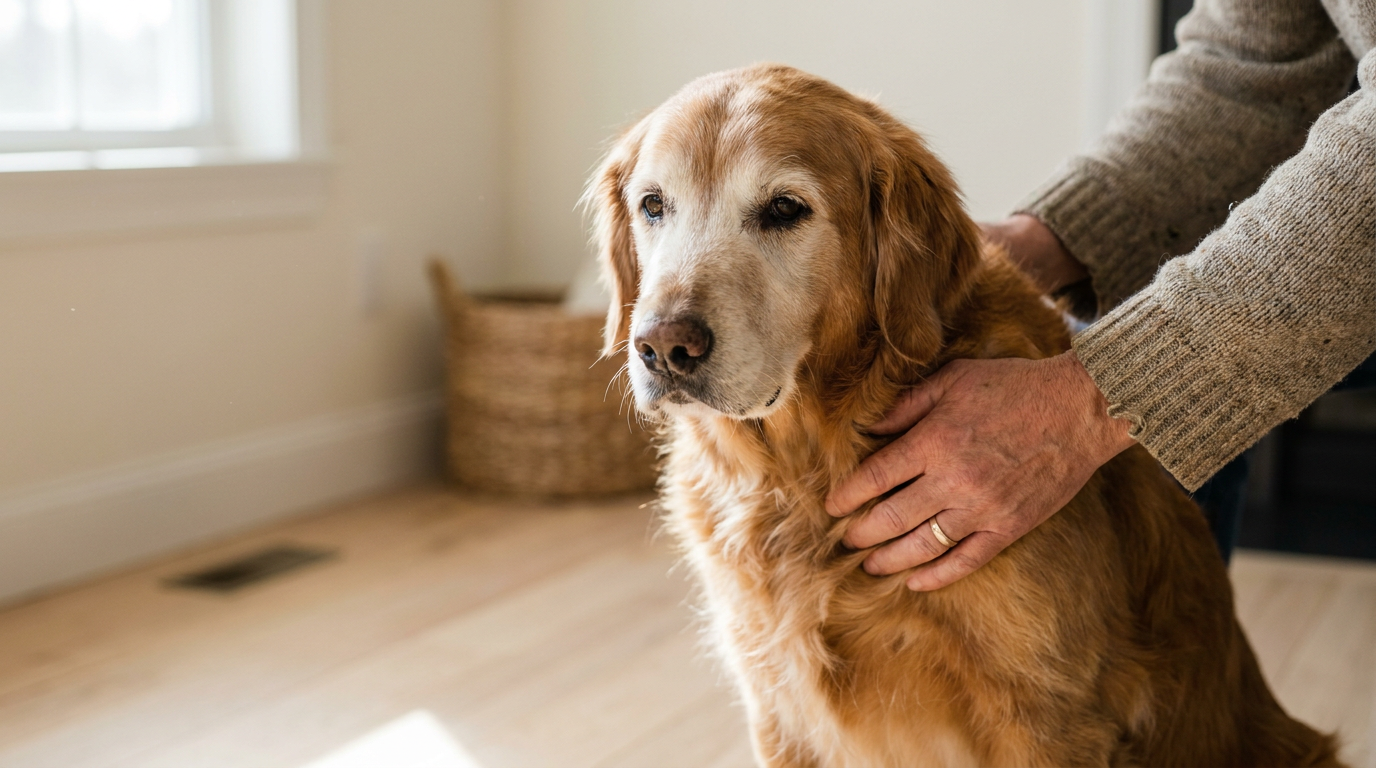
Senior pets
Years of use mean less cartilage cushioning, so cold stiffness is felt sooner and lingers longer.
Large and giant breeds
More weight through each joint, and a higher rate of hip and elbow issues to begin with.
A history of injury or arthritis
Previously injured or arthritic joints are the first to protest when the temperature drops.
Lean, short-coated dogs
Less insulation against the cold, so they chill faster on hard, cold ground.
02A simple winter routine that helps
You do not need anything elaborate to help a stiff dog through winter. The goal is to keep them warm, keep them moving gently, and keep their weight in check so there is less load through every joint. Small, consistent habits beat occasional big efforts.
Warming up matters too. On cold mornings, start with a few minutes of easy lead walking before any running, fetch or stairs, and cool down gently rather than stopping abruptly. Keep sessions shorter and more frequent rather than one long, cold outing, and choose softer ground where you can.
Habits that help
- A warm, padded bed up off cold, draughty floors
- A gentle warm-up walk before any harder activity
- Regular, low-impact movement most days
- Keeping your dog lean to reduce load on joints
- A coat for short-haired dogs on cold outings
Better skipped
- Weekend-warrior bursts after days of rest
- Long, cold walks on hard or icy ground
- Skipping walks entirely until spring
- Slippery floors with no grip for rising
- Human anti-inflammatory medicines, which can be toxic to dogs
03Supporting joints from the inside
Alongside warmth and movement, daily nutrition is one of the steadier levers you can pull. This is where well-chosen pet supplements earn their place. Actives such as glucosamine and chondroitin provide building blocks for cartilage and joint cushioning, while green-lipped mussel is a natural source of omega-3s (EPA and DHA) that support a healthy inflammatory response. These work gradually, so the best results come from giving them consistently, all year, not just when the cold sets in.
Our daily Joint Health+ meal topper brings those actives together in a transparent, weight-based serve, and for fussy eaters or dogs who prefer a reward, FlexiBites+ carries the same kind of support in a tasty treat. For the bigger picture on how these pieces fit together, our complete guide to joint health for dogs and cats is a good next read, along with the early signs your dog needs joint support and when to start.
Weight matters more than almost anything else here. Every extra kilogram is extra load through joints that are already working harder in the cold, so keeping your dog lean is one of the kindest things you can do for their comfort. If winter treats are creeping up, balance them against the day's food and lean on lower-calorie rewards.


Movement is medicine for stiff joints, and warmth makes movement possible. Support the day, every day, and winter gets a little easier.The Innovet approach
04When stiffness is more than the cold
It is easy to file winter stiffness under old age and leave it there, but some signs deserve a proper look. Limping that does not ease once your dog warms up, yelping when touched or rising, muscle loss over the hindquarters, or a sudden refusal to jump or climb stairs are all worth a vet visit. The earlier a joint problem is assessed, the more options you have to keep your dog comfortable and mobile.
Supplements offer nutritional support, not a cure, and this article is general information rather than veterinary advice. If your dog is in pain, losing mobility or unwell, please see your vet, who can diagnose the cause and tailor a plan.
Frequently asked questions
Is my dog stiff because of the cold or because of arthritis?
Cold weather does not create arthritis, but it commonly makes an existing joint condition feel worse, so stiffness that appears every winter often points to underlying wear that is worth having assessed. If your dog is slow to rise, reluctant on walks or stiff after rest, ask your vet to check their joints.
Should I walk my dog less in winter?
Usually the opposite. Regular, gentle, low-impact movement keeps joints supple and muscles strong, which supports the joint. What helps most is consistency and a proper warm-up, rather than long rest days followed by one big outing.
Do joint supplements help more in winter?
Joint supplements work best taken consistently all year, because actives like glucosamine, chondroitin and green-lipped mussel build their supportive effect over weeks. Many owners simply notice the difference more in winter, when stiffness is at its most obvious.
When should I take my dog to the vet?
See your vet if your dog is limping, yelping, struggling on stairs, losing muscle, or if their mobility changes suddenly. These signs need a proper diagnosis rather than waiting for warmer weather.
Keep them moving this winter
Daily, transparent joint support with glucosamine, chondroitin and green-lipped mussel, made in Australia.
Shop Joint Health+ →Human-grade · Australian-made
Explore our range of dog and cat supplements, made in Australia with human-grade ingredients.