By Fabian Barcelo, Founder & Veterinary Scientist
Vet-reviewed
By Fabian Barcelo, Founder & Veterinary Scientist
Vet-reviewed
Few diagnoses worry dog owners more than hip dysplasia. It sounds serious, and it can be, but for many dogs it is a manageable lifelong condition rather than a sentence. At Innovet, we hear from owners across Australia whose dogs are living full, active lives with the right combination of veterinary care, sensible exercise, weight control and targeted pet supplements. This guide explains what hip dysplasia is, what to look for, and where good nutrition genuinely helps.
Key takeaways
- Hip dysplasia is an abnormal fit between the hip ball and socket that can lead to wear and arthritis over time. It is most common in larger breeds.
- Keeping your dog lean is the single most powerful thing you can do. Extra weight loads already-vulnerable joints.
- Joint supplements support comfort and mobility as part of a plan. Diagnosis and treatment decisions belong with your vet.
01What hip dysplasia actually is
A healthy hip is a snug ball-and-socket joint: the head of the thigh bone sits deep in the socket of the pelvis and glides smoothly. In hip dysplasia, that fit is loose or shallow, so the joint is unstable. Over time the abnormal movement wears the smooth cartilage, the body lays down extra bone, and osteoarthritis can develop.
It begins as a developmental problem, influenced by genetics, growth rate and body weight, which is why it often shows up in young, fast-growing large-breed dogs as well as older dogs with established arthritis. It is not caused by a single injury, and it is not something an owner does wrong.
Only a vet can diagnose hip dysplasia, usually with a physical exam and X-rays. If you suspect it, book an appointment rather than self-treating. The nutritional support described here sits alongside veterinary care, it does not replace it.
02Signs worth watching for
Hip dysplasia can be subtle early on. Many of these signs are easy to dismiss as a dog "slowing down".
A swaying gait
A "bunny-hopping" back end or a loose, swaying walk, especially when moving faster.
Trouble rising
Stiffness getting up after rest, or hesitation on stairs and jumping into the car.
Less enthusiasm
Reluctance to exercise, play or walk as far as they used to.
Muscle changes
Thinner thigh muscles over time, sometimes with more developed shoulders as weight shifts forward.
03Why weight is the number that matters most
If there is one lever every owner controls, it is body weight. A dysplastic hip is already working harder than it should. Every extra kilogram adds load to that joint and accelerates wear.
The most powerful step
Keeping your dog lean buys mobility
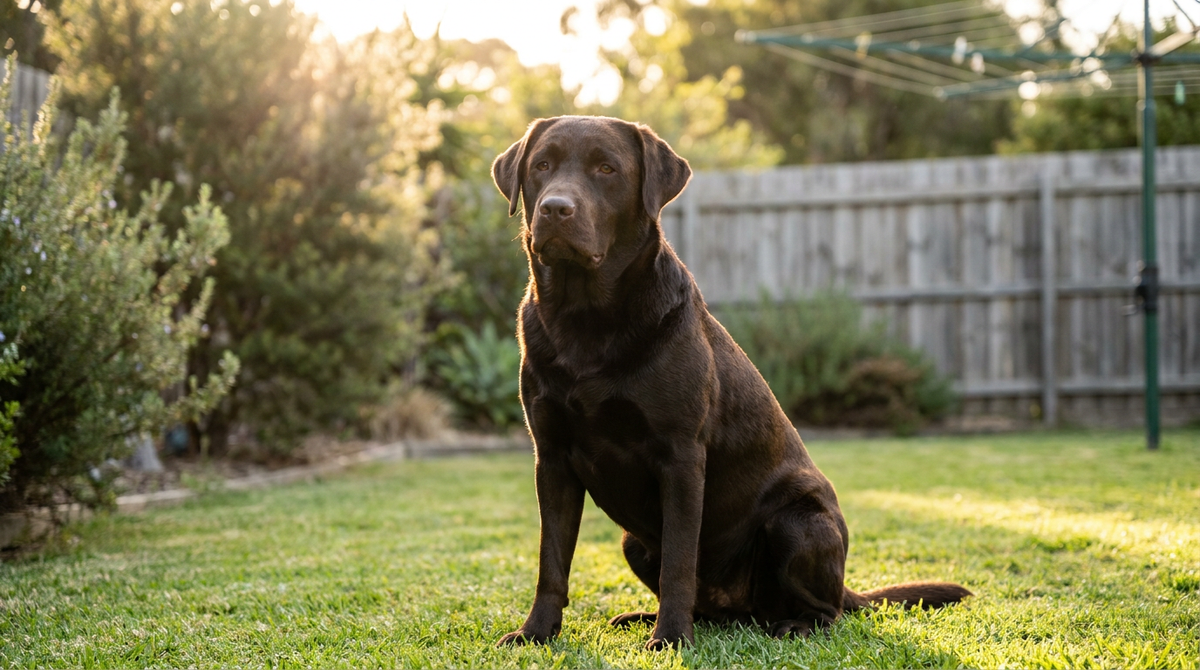
Long-term research in dogs has shown that keeping body weight lean is associated with later onset and reduced severity of hip arthritis. You should be able to feel your dog's ribs easily and see a tucked waist from above. If your dog is carrying extra weight, a vet-guided plan to slim down is often the most effective "treatment" of all.
04Where nutritional support fits
Nutrition will not reshape a hip, but the right nutrients can support cartilage, help manage the comfort of the joint and complement your vet's plan. These are the actives most worth knowing about, each covered in depth in our cluster.
Glucosamine and chondroitin are the classic joint-support pair, providing building blocks associated with cartilage and joint fluid. We unpack the evidence in our glucosamine and chondroitin guide. Green-lipped mussel is a whole-food source of omega-3 fatty acids and other compounds studied for joint comfort, explained in our green-lipped mussel article. Omega-3 fatty acids more broadly are valued for supporting a normal, balanced inflammatory response.
Our daily joint supplement, Joint Health+, combines these kinds of actives with transparent dosing, and for dogs who prefer a chew, FlexiBites+ delivers similar support in a treat format.
You should be able to feel your dog's ribs without pressing. For a dysplastic hip, a lean body is the best support a supplement can stand beside.The Innovet view on joint care
05A daily routine that helps, and one that hurts
Supports the joint
- Regular, moderate exercise like lead walks and swimming.
- A lean body weight, maintained with measured meals.
- Warm, supportive bedding and good footing on slippery floors.
- Consistent joint support and regular vet check-ins.
Adds strain
- Weekend "warrior" bursts after days of rest.
- Repeated high-impact jumping and hard twists.
- Letting weight creep up "just a little".
- Ignoring early stiffness and hoping it passes.
Large and giant breeds carry the highest risk, so if you share your home with a big dog it is worth reading our companion guide to large-breed hip and joint care. For the full picture across every life stage, our complete Australian guide to joint health is the hub for this topic.
Frequently Asked Questions
Can hip dysplasia be cured?
Hip dysplasia cannot be reversed, but it can very often be managed well. Many dogs stay comfortable and active for years with weight control, appropriate exercise, veterinary care and joint support. In some cases a vet may recommend surgical options. Your vet will advise the best plan for your dog.
What is the best food for a dog with hip dysplasia?
The most important nutritional goal is keeping your dog lean, so a complete, balanced diet fed to maintain an ideal body condition is the foundation. Joint-supporting nutrients such as omega-3s, glucosamine and chondroitin can be added through diet or a quality supplement. Ask your vet to confirm the right plan.
When should I start joint supplements for an at-risk breed?
Many owners of large and giant breeds begin proactive joint support early, before signs appear, alongside careful growth and weight management. Because timing depends on the individual dog, it is worth discussing with your vet, and you can read more in our guide on when to start joint support.
Does hip dysplasia only affect big dogs?
It is most common in larger and giant breeds, but smaller dogs and even cats can be affected. Any dog showing stiffness, a swaying gait or difficulty rising should be assessed by a vet regardless of size.

Daily support for happier hips
Joint Health+ pairs clinically familiar joint actives with transparent, weight-based dosing, human-grade and Australian-made.
Shop Joint Health+ →Human-grade · Australian-made
Explore our range of dog and cat supplements, made in Australia with human-grade ingredients.