By Fabian Barcelo, Founder & Veterinary ScientistVet-reviewed
Cats age gracefully, and that is exactly the problem. A senior cat with stiff joints almost never limps; she simply stops jumping onto the bench, sleeps in lower spots, and grooms a little less. At Innovet, we believe owners of older cats deserve the same clarity we bring to pet supplements: what actually changes in ageing feline joints, which signs matter, and what genuinely helps, at home, at the vet, and in the food bowl.
Key takeaways
- Joint changes are extremely common in senior cats, but cats mask discomfort: look for reduced jumping, lower sleeping spots and less grooming rather than a limp.
- Simple home changes, such as steps to favourite spots, low-sided litter trays and warm bedding, make an immediate difference to a stiff cat's quality of life.
- Nutritional support with actives such as green-lipped mussel and glucosamine can support joint function in senior cats, alongside regular veterinary checks.
01Why senior cats hide joint stiffness
Cats are both predator and prey by instinct, and prey animals do not advertise weakness. Instead of limping, a cat with uncomfortable joints changes her behaviour: she avoids the movements that hurt. Because the changes are gradual and quiet, most owners, quite reasonably, read them as "just slowing down".
Veterinary studies consistently find that the large majority of older cats show joint changes on X-ray, yet only a small fraction are ever presented to a vet for mobility problems. The gap between how common joint change is and how rarely it is recognised is one of the biggest quality-of-life issues in senior cats. We explore feline joint health across all ages in our guide to cat joint and arthritis support, and the broader picture in our complete joint health guide.
02The signs that matter in an older cat
Jumping less, or lower
Hesitating before jumps, using a chair to reach the bench, or abandoning high perches she used to love.
Coat changes
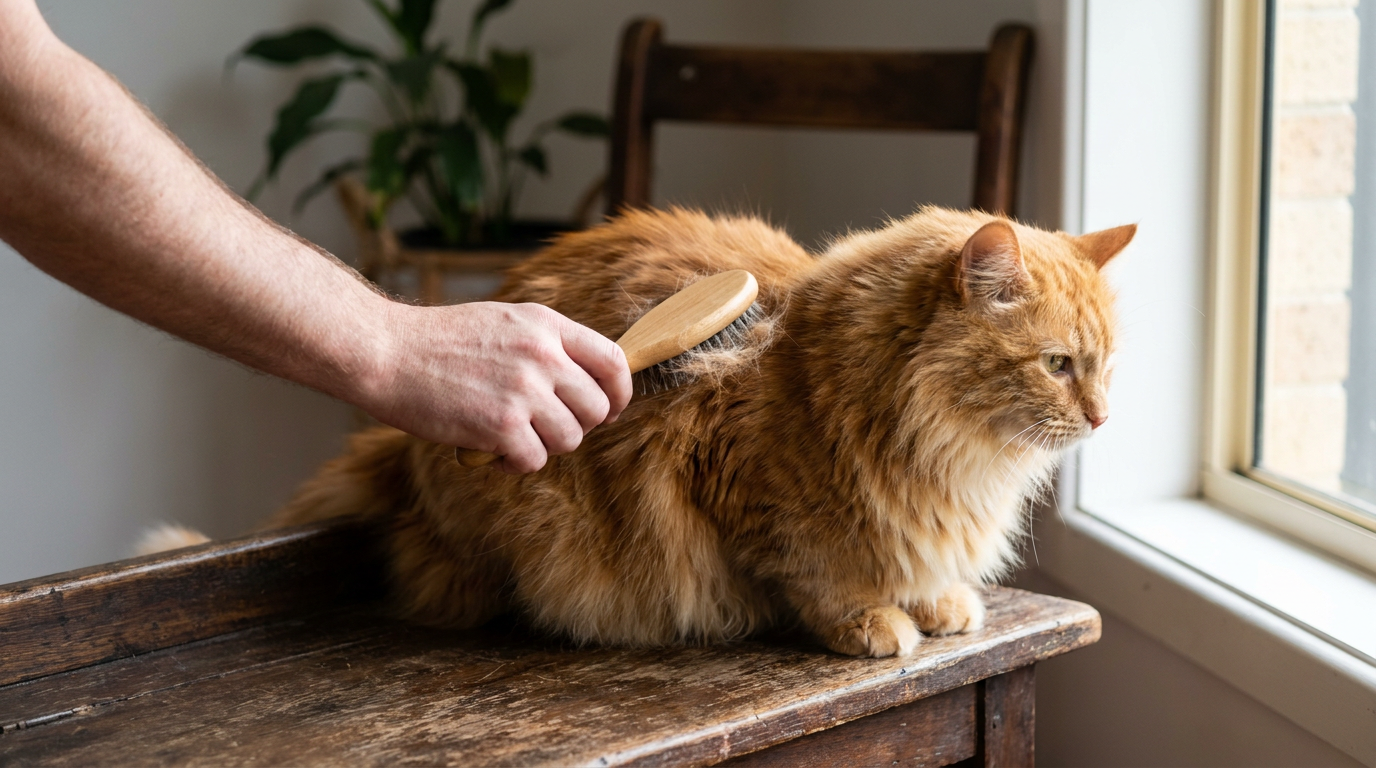
A scruffy or matted coat along the back and hindquarters, where reaching to groom has become uncomfortable.
Slower, stiffer movement
A stilted walk after sleeping, taking stairs one at a time, or choosing to sleep in easily reached spots.
Litter tray misses
Toileting beside the tray can simply mean the sides are now too high to step over comfortably.
Irritability when picked up, withdrawing from the family, and sleeping more than usual round out the picture. Any of these signs in a cat over about ten years old is worth a conversation with your vet, who can rule out other causes such as dental pain, thyroid issues or kidney disease that share some of these signs.
03Small home changes, big difference
While your vet works out what is going on, home adjustments help immediately. Place a step or ottoman beside the bed or couch so favourite spots stay reachable. Swap to a litter tray with at least one low side. Move food and water bowls to floor level, and add warm, padded bedding away from draughts, since warmth eases stiff joints. Keep gentle play going in short sessions; movement maintains the muscle that supports ageing joints.
An old cat who stops jumping has not lost the desire, only the comfort. Give her back the comfort and the cat comes back with it.Fabian Barcelo, Founder & Veterinary Scientist
04Nutrition and supplements for ageing joints
Weight comes first: excess weight is the most controllable burden on a senior cat's joints, and even modest loss reduces load. From there, targeted nutrition earns its place. Actives such as green-lipped mussel, glucosamine and chondroitin, together with omega-3 fatty acids, are the best-studied nutritional supports for joint function in cats, and they are the core of how we formulate pet supplements at Innovet.
Our Joint Health+ is formulated for both cats and dogs, with human-grade ingredients and every active listed per serve by weight, dosed to your cat's size. That transparency matters even more with cats, whose smaller bodies leave less room for guesswork. For the wider senior picture, including appetite, muscle and vitality, see our guide to senior pet nutrition, and for everything cat-specific, the cat supplements guide.
Supplements support normal joint function; they do not treat arthritis or replace veterinary care. Senior cats should have a veterinary check at least yearly, and any sudden change in mobility, appetite or toileting warrants a prompt visit.
Frequently Asked Questions
How do I know if my senior cat has joint problems?
Watch behaviour rather than looking for a limp. Reduced jumping, hesitating before jumps, sleeping in lower spots, a scruffy coat along the back, stiffness after rest and missing the litter tray are the most reliable signs of joint discomfort in older cats.
At what age is a cat considered senior?
Cats are generally considered senior from around ten years of age, and many show age-related joint changes from their middle years onward. Regular veterinary checks from age ten help catch mobility and other health changes early.
Can I give my cat a joint supplement?
Yes, provided it is formulated and dosed for cats. Look for feline-appropriate actives such as green-lipped mussel, glucosamine and chondroitin with clear per-serve dosing by weight. Check with your vet first if your cat has a diagnosed condition or takes medication.
What helps a stiff old cat at home?
Steps or ramps to favourite spots, a low-sided litter tray, floor-level food and water, warm padded bedding, keeping weight lean, gentle daily play, and daily nutritional joint support all help. Veterinary review comes first if stiffness is new or worsening.

Help her keep her favourite spots
Joint Health+ supports ageing joints with green-lipped mussel, glucosamine and chondroitin, dosed by weight with human-grade ingredients.
Shop Joint Health+ →Human-grade · Australian-made