By Fabian Barcelo, Founder & Veterinary ScientistVet-reviewed
Cats groom for a third of their waking hours, which makes skin trouble unusually easy to miss and unusually easy to misread. A cat who is itchy does not always scratch where you can see it. More often she grooms, and grooms, and the first thing an owner notices is not the itch at all but the result: a thinning strip along the belly, a bald patch behind a back leg, or a scatter of white flakes that appears when you run a hand the wrong way up her spine. Understanding what sits behind those signs is the difference between treating the problem and treating the symptom.
Key takeaways
- Overgrooming is an itch response, not a habit. Symmetrical hair loss on the belly or inner legs almost always means the skin is uncomfortable.
- Fleas remain the single most common driver of feline itch in Australia, including in indoor-only cats, and a flea-free-looking coat does not rule them out.
- Nutrition supports the skin barrier over weeks and months. It is a foundation, not a treatment for an active flare, and it works best alongside veterinary parasite control.
01Reading the signs your cat is actually giving you
Cats present skin disease in a small number of recognisable patterns, and knowing which one you are looking at tells your vet a great deal before any test is run.
Symmetrical hair loss down the belly and inner thighs, with skin underneath that looks entirely normal, is the classic overgrooming picture. The fur is not falling out; it is being sandpapered off by a tongue. Scabby, crusty bumps scattered over the neck and back have their own name, miliary dermatitis, and very often point toward flea allergy. Flaky white scale along the spine can mean dry skin, but in an older or overweight cat it frequently means the cat can no longer twist far enough to groom that area properly. And intense scratching around the head, neck and ears deserves prompt attention, because cats can open up the skin badly in a matter of hours.
02The four causes worth ruling out first
Skin signs in cats look broadly similar whatever the cause, which is exactly why guessing is a poor strategy. These four account for the overwhelming majority of cases we hear about.
Fleas and flea allergy
The most common cause by a wide margin. An allergic cat reacts to a handful of bites, so you may never see a flea. Year-round veterinary parasite control is the test and the treatment at once.
Environmental allergy
Pollens, dust mites and moulds. Often seasonal at first, then year-round. Australian cats frequently flare in spring and again through humid late summer.
Food sensitivity
Less common than owners expect, and only diagnosable through a properly supervised elimination diet. Head and neck itching is the pattern that raises suspicion.
A compromised skin barrier
Dry indoor air, low dietary omega-3, obesity limiting grooming reach, or age. The barrier lets moisture out and irritants in, so everything else itches more.
Notice that only the last of those four is primarily a nutritional matter. This is the honest limit of what any supplement can do, and we would rather say so plainly.
Nutrition builds the skin barrier that everything else depends on. It does not replace parasite control, and it does not treat an active allergy.The Innovet position on skin support
03What nutrition genuinely supports
Skin is a high-turnover organ with a real appetite for raw materials, and coat is roughly a quarter to a third of a cat's daily protein requirement. When the diet runs short on the right fats, the barrier thins, moisture escapes more easily, and the threshold at which the cat feels itchy drops.
Marine omega-3 fatty acids, specifically EPA and DHA, are the best-evidenced nutritional lever for feline skin. They support the body's normal inflammatory balance and contribute to barrier lipids. The source matters: cats convert plant-based omega-3 from flaxseed very poorly, so marine origin is not a preference, it is a requirement. Zinc, biotin and adequate high-quality protein round out the picture, and this is the reasoning behind how we formulate our own skin and coat pet supplements.
We go through the fatty acid detail properly in our guide to omega-3 and fish oil for dogs and cats.
04What you can do at home, and what needs a vet
There is a sensible amount of ground an owner can cover before an appointment, and a clear line past which waiting stops being reasonable.
Reasonable to start at home
- Bring flea control up to date and keep it running year-round, every cat in the house
- Add a marine omega-3 skin formula and give it a fair eight to twelve week run
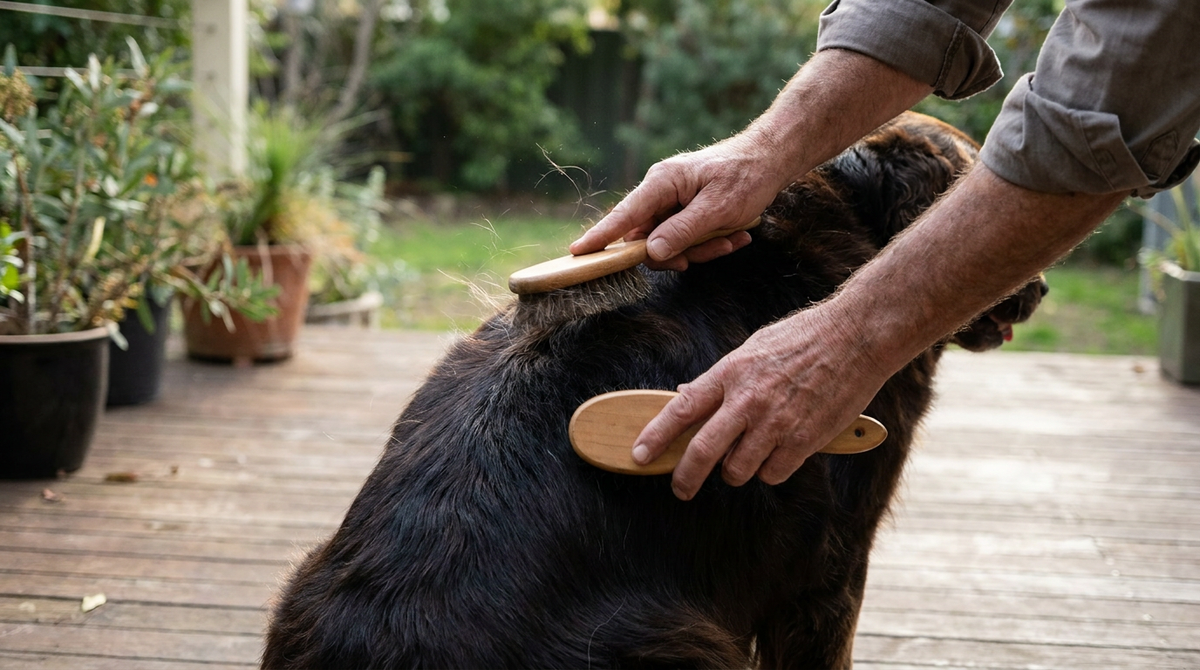
- Gentle regular brushing to lift scale and redistribute skin oils
- Photograph the affected areas weekly, dated, so change is measurable rather than remembered
Book the vet now
- Broken, weeping, bleeding or smelly skin, or any open sore
- Frantic scratching around the head, neck or ears
- Circular scaly patches, or skin changes appearing on people in the household
- Itch alongside weight loss, appetite change, lethargy or increased thirst
Never apply a dog flea product to a cat. Some canine spot-on treatments contain permethrin, which is severely toxic to cats and can be fatal. Use only parasite control your vet has recommended for cats specifically.
05Giving support a fair trial
Skin turns over slowly. A new coat grown on better nutrition takes weeks to reach the surface, so the honest timeframe for judging a skin formula is eight to twelve weeks, not eight to twelve days. Change one thing at a time. If you upgrade flea control, switch food and start a supplement all in the same week, you will have no idea which one helped.
Take a dated photograph of the worst-affected area on day one and repeat it weekly in the same light. Owners consistently underestimate slow improvement and overestimate bad days, and a phone camera settles the argument.
06Where our formulas fit


For the shedding and coat-condition side of the picture, see our guide to cat skin and coat care. Dandruff and scale across both species is covered in dry, flaky skin and dandruff in dogs and cats, the seasonal allergy picture in dogs is in itchy skin and seasonal allergies, and the pillar this all sits under is our Australian guide to skin and coat supplements.
Frequently asked questions
Why is my cat licking her belly bald?
Symmetrical hair loss on the belly and inner thighs, with normal-looking skin underneath, is overgrooming. The fur is being worn away by the tongue rather than falling out. It is an itch response in the great majority of cases, most often driven by fleas or allergy, and it warrants a veterinary examination rather than being treated as a behavioural quirk.
My cat is indoors only. Can it still be fleas?
Yes. Fleas travel in on shoes, clothing, other pets and visiting animals, and an allergic cat reacts to very few bites. A coat with no visible fleas or flea dirt does not rule them out. Reliable year-round parasite control recommended by your vet is the first step for almost every itchy cat.
How long does a skin supplement take to work in cats?
Allow eight to twelve weeks. Skin and coat turn over slowly, so a coat grown on improved nutrition takes weeks to reach the surface. Change one variable at a time and photograph the affected area weekly in consistent light so you are measuring the change rather than recalling it.
Can I give my cat fish oil intended for people?
We would not recommend it. Human products are dosed for human bodyweights and may contain flavourings or additional vitamins that are not appropriate for cats, and vitamin A in particular can accumulate to harmful levels in cats. Use a formula dosed for cats by bodyweight and check with your vet if your cat is on any medication.
Is dandruff on my cat's back a grooming problem or a skin problem?
It can be either, and in older or overweight cats it is often both. Scale along the spine and rump frequently appears because the cat can no longer twist far enough to groom there, which can point to joint discomfort as much as to dry skin. If it is confined to the lower back on an older cat, mention mobility to your vet as well.
Build the barrier from the inside
Marine omega-3s and barrier nutrients, human-grade and clearly dosed, in a powder that disappears into wet food.
Shop Skin & Coat+ →Human-grade · Australian-made