By Fabian Barcelo, Founder & Veterinary ScientistVet-reviewed
A hot spot can appear almost overnight. One moment your dog has a healthy coat, the next there is a red, moist, angry patch they will not stop licking. At Innovet, we know how alarming these flare-ups look. Most need a vet's help to settle, and the real work afterwards is supporting healthy, resilient skin so they are less likely to come back.
01What a hot spot actually is
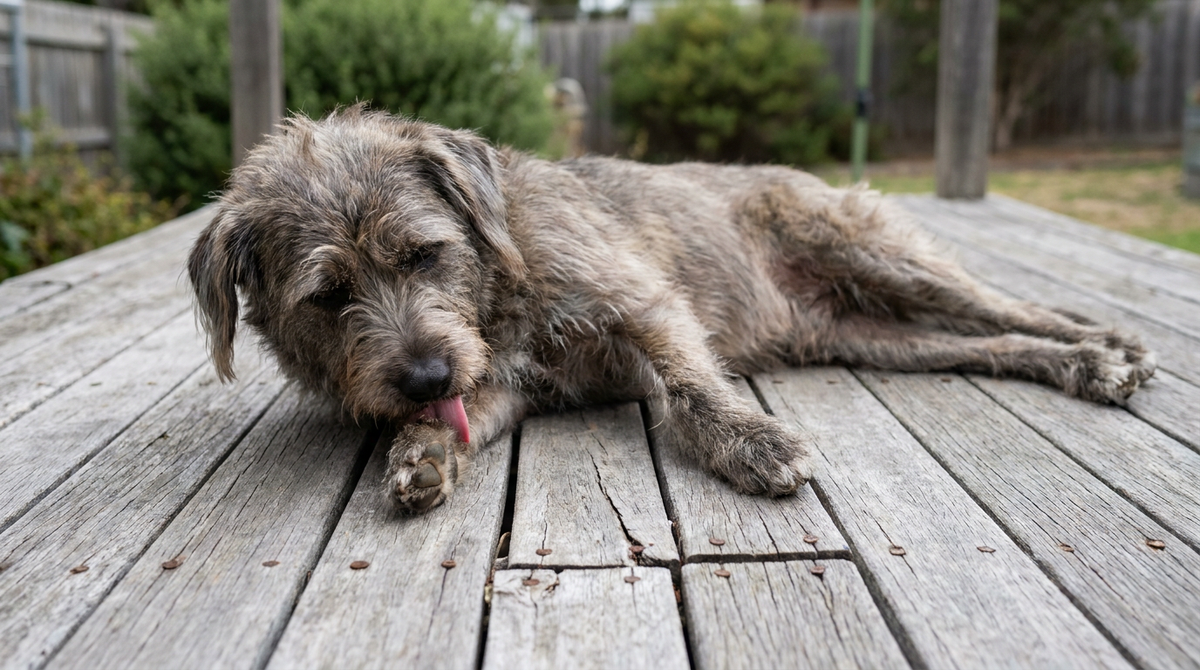
The clinical name is acute moist dermatitis, which describes it well. It starts as a small irritation, and the itch drives your dog to lick, scratch or chew at the spot. That damages the skin barrier, moisture and surface bacteria move in, and the area becomes red, wet and sore. Because the licking feels like relief, a cycle sets in and the patch can spread within hours.
Warm, humid weather makes it easier for these to take hold, and thick or matted coats trap moisture against the skin. That is why hot spots are more common over summer and after swimming or baths, and why the underlying itch matters as much as the patch itself.
It is not the same as a general itch or a dry patch, although those can lead to one. A hot spot is acute, wet and fast, and it needs a different, prompter response.
Allergies and itchy skin
The most common driver. Food or environmental allergies set off the itch that starts it all.
Fleas and parasites
A single flea bite can trigger intense itching in a sensitive dog. Good parasite control is key.
Trapped moisture
Damp fur after swimming, baths or humid weather softens the skin barrier.
Matting and grooming gaps
Knots hold moisture and heat against the skin, especially in thick or double coats.
Boredom or stress licking
Repetitive licking from boredom or anxiety can start the cycle without an allergy at all.
02First response, and what to avoid
If you spot one starting, the priorities are simple: calm the area, stop the licking, and get your vet involved. What you avoid matters just as much as what you do, because a few common home remedies make hot spots worse.
Sensible first steps
- Gently clip the fur around it so air can reach the skin
- Clean the area and keep it dry
- Stop the licking with a recovery collar
- Book a vet visit, as most need proper treatment
- Note what might have triggered it
Best avoided
- Human creams or steroids without vet advice
- Letting your dog lick and chew the area
- Tea-tree or essential oils, which can be toxic
- Leaving it to dry out over days
- Harsh shaving that grazes sore skin
03Supporting the skin barrier from the inside
Once a flare-up has settled, the best long-term defence is a strong, resilient skin barrier, and nutrition plays a real part here. This is where daily pet supplements play a supporting role. Omega-3 and omega-6 fatty acids help support coat comfort and the skin barrier, while cofactors such as zinc, copper and biotin support skin regeneration and can help reduce the dryness, flaking and itch linked to allergies and sensitivities.
Our Skin & Coat+ topper brings those nutrients together for daily use or during seasonal flare-ups, and GlowBites+ offers similar support in a treat for pets that turn their nose up at oils. To go deeper, see our guides to omega-3 and fish oil, itchy skin and seasonal allergies, and dry, flaky skin, along with the broader skin and coat guide.
As with any skin support, consistency is what counts. Fatty acids and skin cofactors work gradually, so give them time and pair them with the flea control, grooming and allergy management that address the trigger.


04Preventing the next flare-up
Because hot spots almost always have an underlying trigger, preventing the next one means tackling the cause, not just the patch. Stay on top of year-round flea control, since a single bite can set a sensitive dog itching. Dry your dog thoroughly after swims and baths, and pay attention to the dense areas behind the ears, under the collar and around the tail base where moisture hides.
Regular grooming stops mats forming and lets you spot irritation early, while managing any known allergies, with your vet's help, addresses the itch at its source. For dogs that lick out of boredom or worry, more enrichment and activity can help break the habit. Together with steady nutritional support for the skin barrier, these habits give flare-ups far fewer openings.
Hot spots often need veterinary treatment, sometimes including clipping, cleaning and medication. This article is general information and nutritional guidance, not a substitute for veterinary care. If your dog has a painful, spreading or weeping patch, please see your vet.
Frequently asked questions
What is a hot spot on a dog?
A hot spot, or acute moist dermatitis, is a patch of red, moist, inflamed skin that can appear and spread quickly. Licking, scratching and biting break the skin barrier and let surface bacteria multiply, which keeps the irritation going. They are often itchy or painful and usually have an underlying trigger.
Can I treat a hot spot at home?
You can gently clip and clean the area, keep it dry, and stop your dog licking it with a recovery collar while you arrange a vet visit. Most hot spots need veterinary care to settle properly. Avoid human creams, steroids and essential oils such as tea-tree, which can be harmful.
Do supplements help prevent hot spots?
Supplements do not treat an active hot spot, but a well-nourished skin barrier is more resilient over time. Omega fatty acids plus cofactors such as zinc and biotin support skin regeneration and can help reduce the dryness and itch that lead to flare-ups, alongside good flea control and allergy management.
When should I see a vet?
See your vet promptly if the area is spreading, weeping, smelly or painful, if your dog will not leave it alone, or if they seem unwell. Recurring hot spots also deserve a vet visit to find and address the underlying cause.
Support skin that bounces back
Skin & Coat+ brings together omega fatty acids, zinc, copper and biotin to support a resilient, comfortable skin barrier.
Shop Skin & Coat+ →Human-grade · Australian-made