By Fabian Barcelo, Founder & Veterinary ScientistVet-reviewed
A puppy builds its entire adult skeleton in somewhere between eight months and two years, and the way that process goes shapes how comfortably the dog moves for the rest of its life. It is completely understandable that owners of big, fast-growing puppies want to help it along. This is one of the few areas of pet nutrition where the instinct to add something extra can do more harm than good, so it is worth being clear about what actually protects a growing skeleton and what does not.
Key takeaways
- Do not add calcium, bone meal or a mineral supplement to a complete and balanced puppy food. Growing puppies, especially large breeds, cannot regulate excess calcium the way adult dogs can.
- Steady, moderate growth is protective. Keeping a large-breed puppy lean and growing at a measured rate is one of the most useful things an owner can do for its joints.
- Pet supplements still have a role in puppyhood, but it is in areas like coat and digestion. Joint actives are generally a question for later, once growth is complete.
01What is actually happening while a puppy grows
Puppy bones lengthen at growth plates, which are bands of cartilage near the ends of the long bones. Cartilage is laid down, then converted to bone, and the plates gradually close as the dog reaches its adult size. In a small breed that process is largely finished by around eight to ten months. In a giant breed it can run to eighteen months or beyond.
The longer that window stays open, the longer there is for something to go wrong. This is why developmental orthopaedic conditions, including hip and elbow dysplasia and osteochondrosis, are much more common in large and giant breeds than in small ones. The genetics matter enormously, but so does what happens during those months, and that part is partly in the owner's hands.
02The calcium mistake
This is the single most important thing in this article. Adult dogs regulate how much calcium they absorb from the gut, so a modest excess is largely dealt with. Very young puppies do not have that protective mechanism fully developed, and absorb a proportion of dietary calcium passively regardless of what they need. Give a growing large-breed puppy substantially more calcium than its diet already provides and the surplus goes into circulation whether the body wants it or not, which can interfere with normal skeletal development.
The number that matters
A complete puppy food already has the calcium sorted
Complete and balanced puppy diets, and large-breed puppy diets in particular, are formulated with a controlled calcium level and a controlled calcium to phosphorus ratio for exactly this reason. A puppy eating one of those foods needs no additional calcium at all. Adding it is not a small overshoot with no consequence, it is an intervention in a process that was already balanced.
The same logic applies to vitamin D and to broad mineral supplements. If your puppy is on a complete food, the mineral side of the equation is already done. Our general guide to puppies and supplements covers the wider question of what is and is not worth adding.
The exception is a home-prepared diet. Recipes that are not formulated by a veterinary nutritionist frequently get calcium, phosphorus and the ratio between them wrong in both directions, and a growing puppy is the worst possible dog to get that wrong on. If you are feeding home-prepared, please have the recipe checked professionally.
03Growth rate matters more than almost anything else
A large-breed puppy will reach the same adult size whether it grows there quickly or steadily. Getting there quickly, by overfeeding, means carrying more body weight across joints and growth plates that have not finished forming. Research in growing dogs has consistently found that restricting intake to a moderate, controlled level, so the puppy stays lean rather than chubby, is associated with better long-term joint outcomes.
Practically, that means measuring meals rather than free-feeding, adjusting the amount to the puppy in front of you rather than the number on the bag, and being able to feel ribs under a light layer of covering without pressing hard. A roly-poly large-breed puppy is not a healthy one, however appealing it looks.
You cannot make a puppy's skeleton better than its genetics allow. You can absolutely make it worse by growing it too fast.Innovet
04What helps, and what to avoid, during growth
Supports healthy development
- A complete puppy diet, size-appropriate, fed to a measured amount.
- Keeping the puppy lean throughout growth.
- Free play and self-paced exercise on grass and other forgiving surfaces.
- Keeping treats to a modest share of daily intake so meals stay balanced.
- Talking to your vet about the timing of desexing in large breeds.
Best avoided while growing
- Added calcium, bone meal or mineral supplements on top of a complete food.
- Free-feeding, or feeding to appetite in a large breed.
- Long forced runs, repetitive fetch and jumping on hard surfaces before growth is finished.
- Adult maintenance food as a way of slowing growth. Use a puppy diet and control the amount instead.
- Unbalanced home-prepared recipes without professional formulation.
05Where pet supplements genuinely fit in puppyhood
Ruling out calcium does not rule out everything. There are a few places where supplementation is reasonable in a young dog, and they are mostly not about bone.
Skin and coat. Long-chain omega-3 fatty acids support the skin barrier, and puppies going through coat changes or seasonal itch can benefit. This is a genuine gap in many diets rather than a top-up of something already present.
Digestion. Puppyhood involves a lot of dietary change, from the breeder's food to yours, plus vaccinations, worming and new environments. Probiotic and prebiotic support around those transitions is low-risk and often helpful. Our guide to probiotics and prebiotics covers the detail.
Joint actives, later. Glucosamine and green-lipped mussel are not corrective for a developing skeleton and are not a substitute for controlled growth. Where they become relevant is once a dog is grown and either has a known predisposition, a diagnosed joint condition, or is heading into the years where load starts to tell. We work through the timing in when to start joint support.
06If your puppy is a large or giant breed
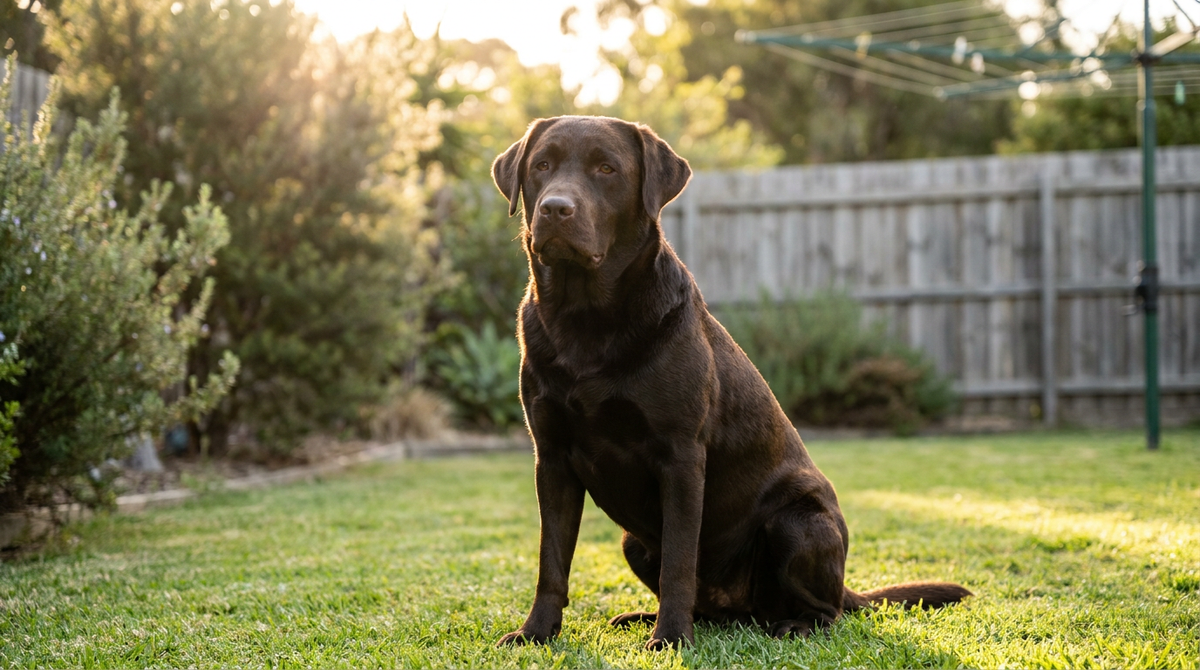
Everything above applies with more force. Labradors, retrievers, german shepherds, rottweilers, great danes, mastiffs, wolfhounds and the like grow for longer, carry more weight, and have higher background rates of hip and elbow problems. If you have one of these puppies, the useful things are unglamorous: a large-breed puppy formula, measured meals, a lean body condition, sensible exercise, and an honest conversation with your vet about screening and desexing timing.
If you notice a limp, a bunny-hopping gait, reluctance to use stairs, or soreness after normal play, that is a veterinary appointment rather than a supplement decision. Developmental joint conditions are far more manageable when they are picked up early. Our guides to hip dysplasia and nutrition and large-breed hip and joint care go further into what happens next.


For the wider picture on what dogs of every age do and do not need, see our complete guide to dog supplements in Australia and the joint health hub.
Frequently asked questions
Should I give my large-breed puppy a calcium supplement for strong bones?
No, not if the puppy is eating a complete and balanced puppy food. Young puppies absorb a proportion of dietary calcium passively and cannot down-regulate it the way adults can, so extra calcium can interfere with normal skeletal development rather than strengthen it. Complete large-breed puppy diets already contain a controlled calcium level and calcium to phosphorus ratio.
When can I start a joint supplement?
Joint actives such as glucosamine and green-lipped mussel are generally considered once a dog is grown, rather than during active growth, because they do not influence how the skeleton forms. The timing depends on breed, size and whether there is a known predisposition or diagnosis, so it is a good question for your vet at an annual check.
How much exercise is safe for a growing puppy?
Self-paced play and exploration on forgiving surfaces such as grass are fine and valuable. What is best limited while growth plates are open is repetitive, forced or high-impact exercise: long runs alongside a bike, extended fetch sessions, and repeated jumping on hard ground. Let the puppy set the pace and stop when it wants to.
Is it better to feed adult food to slow a large-breed puppy's growth?
No. Adult maintenance diets are not formulated for growth and the mineral profile is not designed for a developing skeleton. If you want to moderate growth rate, use a large-breed puppy formula and control the quantity fed, ideally with your vet monitoring body condition at each visit.
What are the early signs of a joint problem in a puppy?
Limping, a bunny-hopping gait when running, reluctance to jump or use stairs, sitting with a leg out to the side, or soreness and stiffness after ordinary play. Any of these warrant a veterinary examination rather than a change of supplement, because developmental joint conditions are more manageable when found early.
Support that fits the dog, not the hype
Health Boost+ gives broad daily nutritional support with every active listed per serve, by weight, so you always know exactly what your dog is getting.
Shop Health Boost+ →Human-grade · Australian-made
Explore our range of dog and cat supplements, made in Australia with human-grade ingredients.